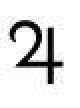
Jupiter’s mean synodic period repeats after slightly less than
399-days. A synodic period completes when an observer sees the
celestial sky return to the previous state. Jupiter moves into
each of 12 constellations approximately every 34-days. Our own
faster 365.25-day revolution about the sun overtakes Jupiter by
slightly more than a month year after year.
399-Day
Mean Synodic Period of Jupiter
Jupiter’s mean synodic period repeats after slightly less than
399-days. Recall that the synodic period completes when an
observer sees the celestial sky return to the previous state.
Jupiter’s actual orbit is slightly less than 12-years or
11.86-solar-years. Jupiter moves into each of 12
constellations approximately every 34-days. For example,
Jupiter's heliacal rising occurring in the constellation Leo is
followed 399-days (≈ 398.88-days) later by the next heliacal rising
in the constellation Virgo. Our own faster 365.25-day
revolution about the sun overtakes Jupiter by slightly more than a
month year after year. Jupiter seems to shift an entire
constellation toward the east from its previous place. Jupiter
continues this trek near to the ecliptic plane for 391 heliacal
risings altogether. The earth, sun, and Jupiter are now again
in the same relative positions as at the beginning of the cycle and
the entire cycle repeats.
Jupiter’s close attachment to significant, round calendar values and
magnificent brilliance makes the planet an easy candidate for
ancient worship. Wandering stars or planets were highly
praised major deities. A visible giant among the planets,
Jupiter is eleven times larger than earth. The brightest stars
(planets in this case) were the most influential, an idea carried
forth into modern astrology. Babylonian mythology assigns
Jupiter the planetary god role of Marduk. Babylonian Marduk
was the acknowledged the “king of the gods”. The Greeks
referred to Jupiter as Zeus. Romans worshiped Jove and Jupiter
names interchangeably. Jupiter and Zeus shared similar
characteristics through later cultural borrowing. They were
equal counterparts in the imaginary celestial hierarchy.
The
story of Marduk is a Creation story very similar to the Bible’s own. The myth
evidently stems from the Old Babylonian Empire, about 1800
B.C.E. Marduk is sovereign deity over the heavens.
Marduk institutes order by killing the dragon of primordial chaos,
Tiamat. Marduk then creates the sky (firmament of heaven, Genesis 1:8) and the sea
(firmament of waters, Genesis 1:7)
from the monster's remains. He establishes the year and
divides the length into 12-months. Marduk assigns the other
constellation gods to their stars and planets. Marduk decides
that Jupiter’s path along the ecliptic will guide the stars.
The Babylonian Creation Epic, Enuma Elish further mentions Marduk
had 50 names associated with 50 special powers. Jupiter
traditionally marks a 12-year pattern that repeats the stellar
configuration almost exactly every 12-years. Babylonian
scribes knew that Jupiter opposes the sun (opposition) according to
a nearly 12-year cycle. They added intercalary days to plot
Jupiter’s position for a zigzag effect in the astronomical
diaries. Marduk also determines the horizon and zenith.
He furnishes the sun’s rising and setting positions and places the
moon to light the night and count the days (Genesis 1:14). Marduk,
Zeus, Jove or Jupiter was the designated ruler in the night sky.
Ancient calendar makers keenly sought time multiples in celestial
operations. They choose references that provided lesser
denominations and particularly those offering the closest
approximations to whole number integers. Jupiter’s synodic
period influenced early mythology and the Antediluvian
Calendar. Jupiter’s synodic period between superior
conjunctions rounds off to 399-days and rounding further,
400-days. Both Jupiter and Venus share mythological roles in
ancient astronomy. Numerical matching themes of
364-day-Ethiopic-years enable 399-days to match with
399-years. Squaring 20-year-l/s-Katun-cycles to make one Mayan
400-year-Baktun-cycle circumscribes the Mayan 104-year Venus
Round. The Judaic 105-year Venus Round seen for Seth is a
variant stemming from the numerical matching concept. The
Egyptian Calendar likewise incorporates mythology. Hathor was
the son of Isis/Osirus and refers to planet Jupiter. Moving at
the rate of about one constellation per year, a 12-year path near
the ecliptic was evident for 4,332.6-days (sidereal orbit).
The deity Hathor was commander for the 400-year timekeeping
instrument of the ancient Egyptian Calendar. Jupiter’s time
estimate of a 399-day synodic period spiritually aligns with
399-years and naturally conforms to the 400-day and year numerical
matching theme so prevalent in ancient calendars. One year
360-day difference equals 36 decan stars of legend having 10-days or
10-degrees of separation between them.
Returning to a 364-day-Ethiopic-year, where the last day of a
365-day-solar-year numerically matches the same number of years, the
synodic period of Jupiter exceeds by 35-days. The only
difference is 1-day, so Jupiter appeared one constellation easterly
after 1-Ethiopic-year, plus 35-days. Consistency in ancient
calendar numbering systems suggests the early view that Jupiter had
a 400-day synodic period. The planetary god numerically
matches 400-year integer multiples pertaining to synodic movements
through the zodiac. Numerical matching of X-day with X-years
allows extrapolation. Jupiter was instrumental to the
400-year-Baktun-cycle known to the Mayans. Since two
400-year-Baktun-cycles comprise one 800-year Generation Cycle, we
can substitute earlier statements with more detail. One Mayan
104-year Venus Round happens in 400-years and two Mayan 104-year
Venus Rounds occur for every 800-year Generation Cycle. Genesis 5:6 lists Seth’s primary
105-year age for the Antediluvian Calendar of the Patriarchs.
The Judaic variant 105-year Venus Round is the primary age of Seth.
Are you a pastor, educator or a student of the Holy Bible? Timeemits.com
seeks anointed people to review and contribute to the Ages_of_Adam ministry.
Ancient lunar/solar calendars like the Jewish and Mayan calendars
provide the background to understanding early time. Ancient
calendars of the Holy Bible
use differences between the moon and sun, numerical matching and a
364-day calendar year to describe X-number of days that match with
X-number of years. Ages_of_Adam
is a free read at timeemits.
Clark Nelson is webmaster for http://www.timeemits.com/Get_More_Time.htm,
author of Ages_of_Adam and
sequel, Holy_of_Holies.
Copyright 2006 Clark Nelson and timeemits.com All Rights
Reserved. URL http://www.timeemits.com/HoH_Articles/399-Day_Mean_Synodic_Period_of_Jupiter.htm
Jupiter, synodic, constellation, wandering stars, planets, gods,
Ethiopic, Mayan, Marduk, creation, Genesis, Venus, generation,
cycle, mythology, Seth, patriarchs